Algarve-South-Portugal.com
The best independent guide to Tavira
Algarve-South-Portugal.com
The best independent guide to Tavira
When to Visit Tavira: Weather Guide and Best Month to Visit
Tavira is the Algarve's most charming town and my personal favourite. It is a place that combines glorious island beaches with a genuinely beautiful historic centre, Roman bridge, hilltop churches and a relaxed Portuguese atmosphere that the bigger resorts lost long ago.
The region enjoys a classic Mediterranean climate, featuring hot, dry summers and mild winters. The weather is reliably fine for heading to the beach from mid-April through to mid-October. The peak months are July and August, when the town is at its busiest, accommodation fills up, and the queues for the ferry across to the Praia da Ilha de Tavira can test your patience.
For most visitors, the best months to visit Tavira are June and September. My personal favourite is May. The weather is warm and settled, perfect for exploring the town's historic streets and surrounding countryside without the fierce heat that sets in from mid-June onwards. It is also a lovely time for day trips along the eastern Algarve, which become too draining in the full summer sun.
Spring and autumn are particularly well suited for activity-based holidays. Tavira is one of the best bases in the Algarve for sightseeing, with Olhão, the Ria Formosa and the Spanish border town of Ayamonte all within easy reach.
Winter months (November through March) bring cooler conditions and occasional rainfall, but this is when Tavira is at its most authentic. The eastern Algarve enjoys some of the mildest winter weather in mainland Europe, and Tavira's permanent population keeps the town fully open, with restaurants and shops staying open year-round, unlike smaller resort towns. I have so many happy memories from low season visits: having the castle entirely to myself, long unhurried lunches in a half-empty old town.
I've been exploring the Algarve with my Portuguese wife for over 25 years. Tavira is the town we return to most often, and this guide will help you identify the ideal time for your visit, and what to expect from each season.
Tavira Weather Overview
Tavira sits on the eastern Algarve, a stretch of coastline that enjoys some of the warmest and driest conditions in mainland Portugal. The region records over 300 days of sunshine annually, and the sheltered position behind the barrier islands of the Ria Formosa gives the town a noticeably calmer, warmer feel than the more Atlantic-exposed resorts to the west.
Summers are hot and dry, with July and August seeing average high temperatures of 30°C (86°F) to 33°C (91°F). Official statistics never really tell the true story of what it feels like, as they measure air temperature in the shade. Waiting for the ferry across to Ilha de Tavira in the midday August sun, it will feel significantly hotter than 30°C.
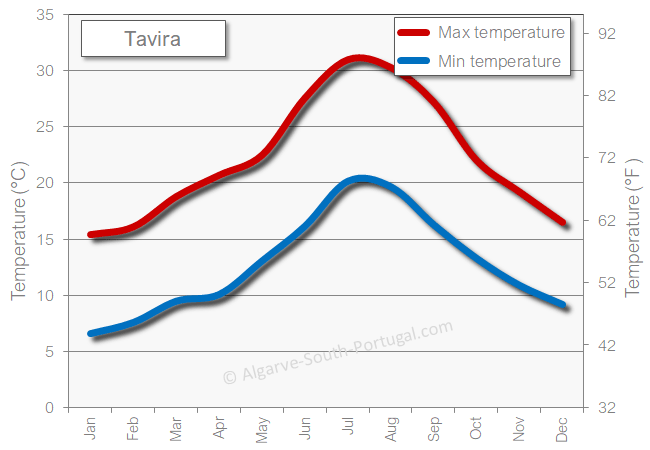
The daytime maximum temperature (measured in the shade) and night-time minimum
These months are particularly intense, with occasional heatwaves pushing temperatures above 40°C (104°F). During this peak summer period, rainfall is virtually non-existent and visitors can expect around 12 hours of sunshine daily.
June and September offer the most comfortable weather, with warm temperatures between 25°C (77°F) and 30°C (86°F) and plenty of sunshine without the fierce heat of midsummer.
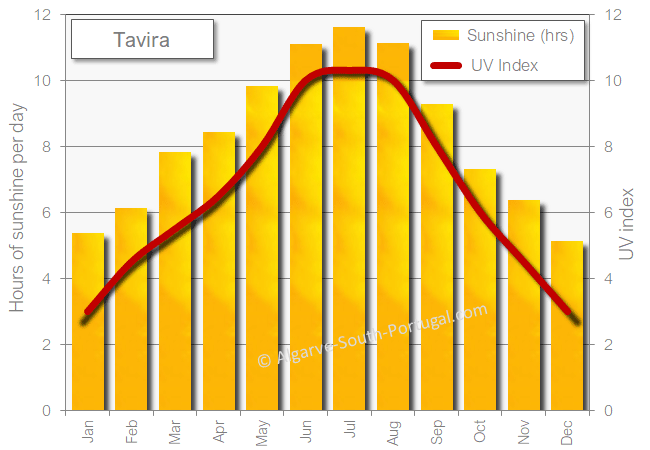
The average hours of sunshine per day and UV intensity
Early spring (March and April) can be surprisingly wet, with occasional rainfall systems passing through. By May, conditions typically dry out and the weather settles into a reliable pattern of warm, sunny days, though temperatures remain cooler than the summer months.
Winter in Tavira (December to February) is mild compared to northern Europe, with daytime temperatures typically between 15°C (59°F) and 18°C (64°F). This is the wettest period, with December and January receiving the majority of the annual rainfall. Even during winter, bright sunny days are common between rainy spells, and temperatures rarely drop below 5°C (41°F) at night. The eastern Algarve enjoys some of the mildest winter weather in mainland Europe, making Tavira a particularly appealing option for those seeking a low season break.
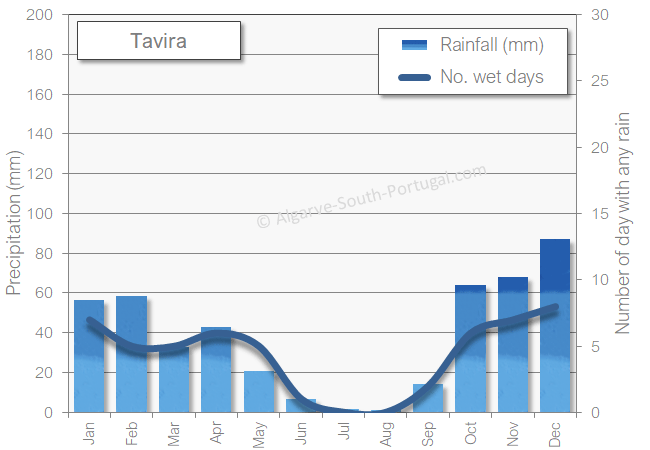
The monthly rainfall and number of wet days
How many beach days per month?
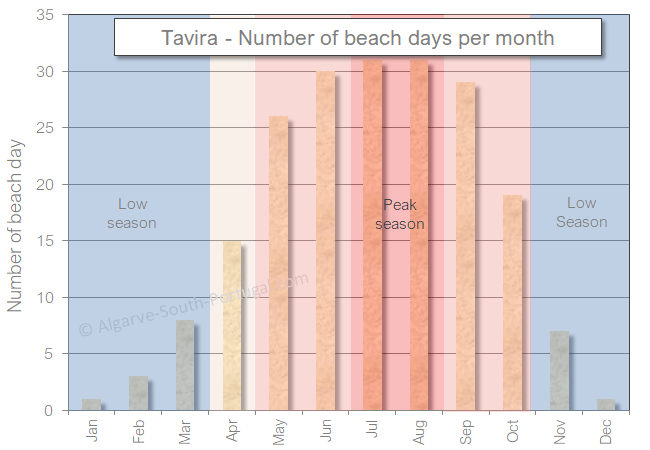
Before planning your holiday to Tavira, it's helpful to understand how beach-friendly the climate is throughout the year. Not every sunny day is a beach day. I class a "beach day" as one with at least three consecutive hours of full sunshine (minimal cloud cover) and temperatures exceeding 22°C (73°F).
Summer provides the most reliable beach weather, with nearly every day in July and August suitable for visiting the beach. In contrast, the winter months of December through February rarely qualify as beach days, with temperatures typically remaining below the 22°C threshold even on sunny days.
The following chart shows the average number of beach days for each month in Tavira.
Have You Booked Your Accommodation?
Tavira has a wonderful mix of boutique hotels, guesthouses and holiday rentals, but the best options are snapped up early, particularly for June to September. The town's popularity with returning visitors means many book the same places year after year, so I would always recommend securing your accommodation as early as possible.
The map below displays hotels and accommodation in Tavira. Adjust the dates to your holiday to see current prices and availability.
Sea Temperatures in Tavira
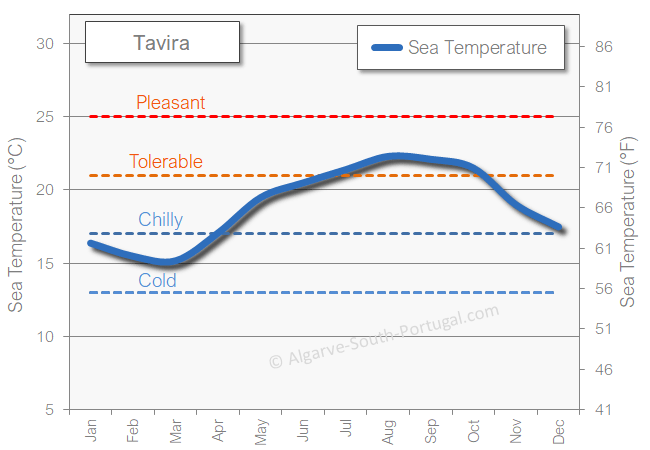
Tavira has beautiful beaches along the southern side of Ilha de Tavira, but it comes as a shock to many first-time visitors just how cold the water actually is. The beaches face the Atlantic Ocean, and the North Atlantic Current keeps the water cooler than the air temperatures would suggest.
Winter months (December through March) see the coldest waters, typically 16°C (61°F). I found out the hard way how cold these waters are. After going for a swim at Praia do Barril on a sunny day in March, I put my head under and came out almost straight away
By summer, the waters warm, but still feel chilly. The peak temperatures come in August and September, reaching around 22°C (72°F), making this some of the warmest sea bathing in Portugal.
That said, 22°C will still feel surprisingly cold when the air temperature is 35°C (95°F) or more, and the initial plunge from the warm sand into the Atlantic remains a memorable experience.
Tavira's Tourist Seasons: What to Expect
Peak Season (July-August): Tavira is at its busiest, though it never feels overwhelming in the way that Albufeira or Lagos can. The town fills up with families during the school holidays, accommodation books out months in advance, and you will need reservations at the popular restaurants. The beaches on Ilha de Tavira get crowded, especially the central sections closest to the ferry landing, and the queues for the ferry itself can be frustrating at peak times.
The heat limits what you will realistically want to do. Peak summer in Tavira is about the beach, boat trips, and long evenings eating out in the old town. The atmosphere stays relaxed and sociable rather than chaotic, which is one of the things that sets Tavira apart from the bigger resorts.
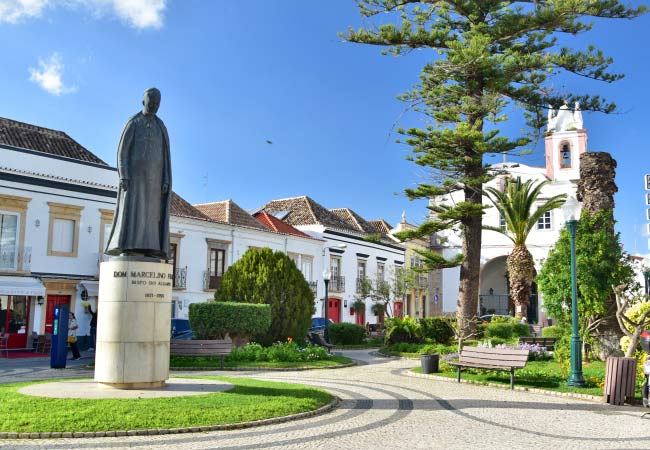
High Season (June and September): These are my recommended months if you want warm beach weather without the peak summer intensity. The town has a lovely feel, busy enough to have a good atmosphere but relaxed enough that you can get a table at most restaurants without booking and find space on the beach without arriving early.
The mix of visitors shifts towards couples and retirees, and the pace of the town slows down noticeably from July and August. Accommodation prices remain fairly high, so do not expect major savings, but you will have more choice and flexibility with booking.
These months are also ideal for day trips along the eastern Algarve. Olhão is a short journey away with its famous waterfront fish market and ferry access to the Ria Formosa islands. Vila Real de Santo António, right on the Spanish border, is worth a visit for its elegant Pombaline central square and the riverside promenade along the Guadiana.
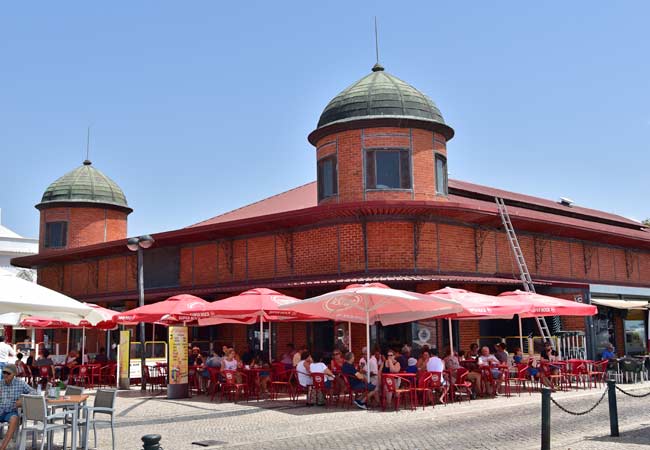
Shoulder Season (April, May and October): Tavira slows right down and feels much more like a local Portuguese town. The milder temperatures make this the best time for exploring on foot, whether that is wandering the historic streets, cycling along the coast, or birdwatching in the Ria Formosa. Beach days are still possible, particularly in May and early October, though the sea is cold.
Accommodation prices drop significantly, and you can often find good deals on places that would be well out of budget in summer. Restaurants do not need booking, and the whole town has a quieter, more unhurried feel.
Low Season (November-March): This is when I find Tavira at its most appealing, and I realise that is not for everyone. The town becomes very quiet, with a small community of long-stay visitors and returning retirees mixed in with the locals. Some restaurants close or reduce their hours, but enough stay open to keep the old town ticking over, and those that remain open tend to offer a more local experience.
Accommodation prices are at their lowest, and long-term rentals become remarkably affordable. The eastern Algarve has some of the mildest winter weather in mainland Europe, so you can still get out walking and sightseeing on most days. If you want a genuine taste of Portuguese life without the tourist overlay, there is nowhere better in the Algarve.
When best for young families (Easter to July)
Tavira in spring and early summer is an ideal time for a family holiday. The weather is clear and sunny without the summer heat and humidity, which can be too much for little ones. The long daylight hours are also great for early risers and make evenings very safe when out and about.
The town is very family-orientated. Most attractions welcome young visitors with discounts and there are a broad range of activities in and around the nature park for little explorers from Easter onwards.
Local eateries and restaurants cater for children and there is a wide selection open year-round so there's no need to book ahead in off-peak seasons. From Easter, the beaches of Ilha de Tavira, particularly Praia da Tavira, are also perfect for a child-friendly day out.
From May onwards beaches are supervised by lifeguards and the calm, shallow-gradient waters are safe for splashing around. Praia da Tavira also has toilets, beach amenities and plenty of activities to keep short attention spans busy.
It is worth noting that whilst Tavira is a great, safe family destination, it is further away from the waterparks and mayhem of the golden triangle of the Algarve. Therefore, it may not suit independent teenagers who are looking to do more active pursuits.
When to visit for older people (September to October)
While Tavira retains its charm in peak season, those lucky enough to travel in mild autumn will find the city is much more peaceful. Just after peak season the religious and cultural sights are quieter and visitors can roam across the Ponte Romana Bridge into the centre of Tavira with the locals.
Tavira's climate in autumn is still pleasant (mid-20s degrees Celsius) and daylight hours are still relatively long (9-10) but the intensity of the direct sun reduces. This makes it ideal weather for touring, and Tavira is a wonderful base to explore the quieter Eastern Algarve.
Our most popular guides to Tavira and the eastern Algarve


Expert Insight: These guides are curated by Philip Giddings, a travel writer with over 25 years of local experience in Portugal. Since 2008, Phil has focused on providing verified, on-the-ground advice for the Algarve region, supported by deep cultural ties through his Portuguese family. Read the full story here.
Algarve-South-Portugal.com, with over 200 pages of holiday guides, if it's not here, it's probably not in the Algarve
 -
-


