Algarve-South-Portugal.com
The best independent guide to the eastern Algarve
Algarve-South-Portugal.com
The best independent guide to the eastern Algarve
The Eastern Algarve: authentic Portugal away from the crowds
Most of the Algarve's seven million annual visitors turn west out of Faro Airport, towards the manicured beaches of Vilamoura and the neon lights of Albufeira. But if instead you turn east, you will get the Algarve of 25 years ago.
This is a coast where the fishermen still outnumber the sunbeds, where the islands of the Ria Formosa keep their beaches almost deserted, and where a town like Tavira has barely altered in 200 years. You will find no high-rises here, no water parks and no bar crawls. This is the slower-paced Algarve, where people make time to chat, take longer for lunch and wait until the last ferry before leaving the beach. There are interesting sights, such as the castles of Castro Marim, the red-domed market halls of Olhão and the elegant streets of Vila Real de Santo António, but for me, this is a region I come to slow down in, especially after the hectic pace of life in Lisbon, where I currently live.
I feel the difference in pace and mentality comes down to the coastal geography. Instead of the cliffs and powerful Atlantic waves of the western Algarve, the Ria Formosa Natural Park protects a sheltered region of lagoons, salt marshes and barrier islands running the length of the eastern coast. The islands of Tavira, Fuseta and Culatra offer some of the calmest waters in the country, backed by dunes and seagrass rather than hotels and apartments. It is a slower, gentler coastline than the one most visitors picture when they think of the Algarve, and, in my view, all the better for it.
I have been visiting Portugal since 2001 and, together with my Portuguese wife, I know this entire region from years of exploring. I want to help you work out whether it is the right region for you as a holiday destination or a day trip, and show you where to visit. This guide shares what I have learned, so you can find your own quiet corner of a region that, for now at least, has kept its character intact.
My highlights of the Eastern Algarve
Tavira's riverside charm
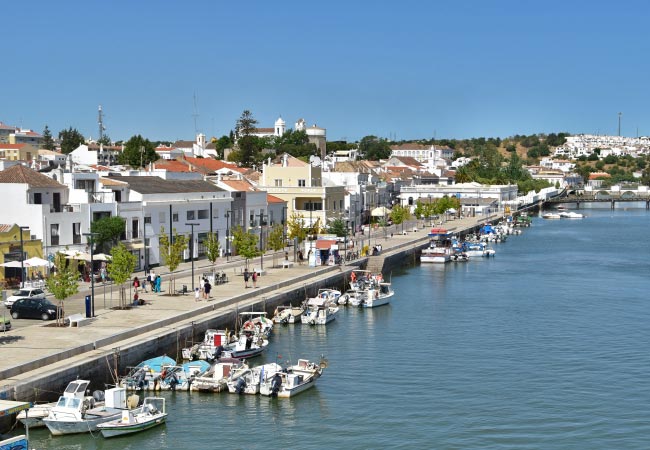
A low Roman bridge, cobbled streets lined with whitewashed houses, and small plazas planted with orange trees. Tavira is, to my mind, the prettiest town in the Algarve.
Ilha de Tavira beach
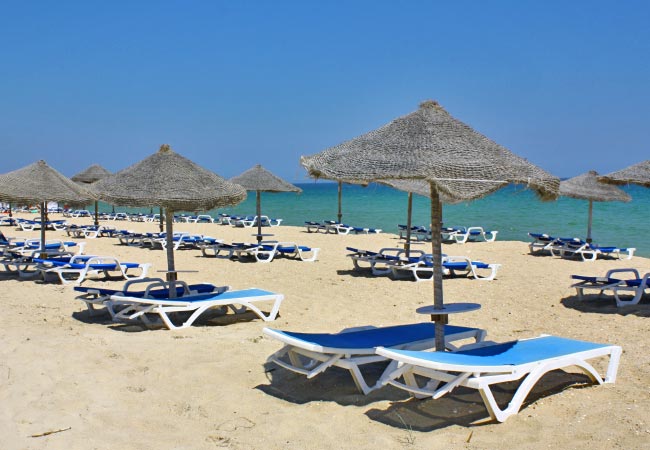
Eleven kilometres of soft golden sand and shallow, clear water, reached by a short ferry from the town. Walk ten minutes from the landing and you will have the beach almost to yourself.
Olhão market
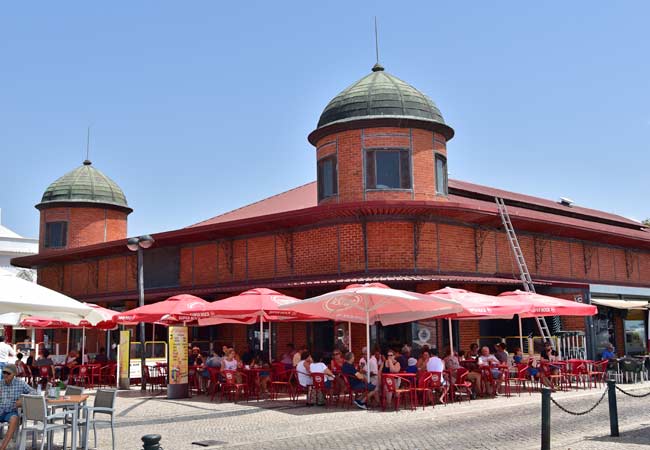
Two red-domed halls sit side by side on the Olhão waterfront, one for fish, one for fruit and vegetables. Arrive before nine on a Saturday morning to see them at their busiest and best.
Vila Real de Santo António
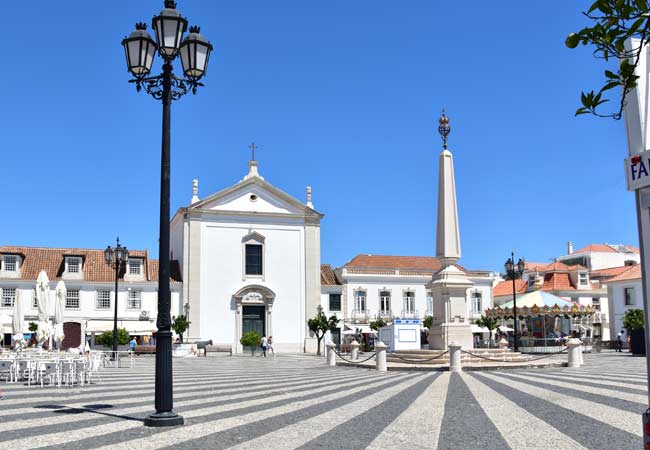
Rebuilt in just five months in 1774 to a perfect grid of elegant streets, Vila Real is the most surprising town in the Algarve. Its grand central square, paved in black and white Portuguese cobbles, would not look out of place in Lisbon.
Who should visit the Eastern Algarve?
I will be honest with you, because the Eastern Algarve is not for everyone, and the wrong choice of region can quietly ruin a week's holiday.
This is a corner of Portugal where the days are long and slow, where the entertainment is a sunset over the lagoon rather than a beach club DJ. My parents, who are in their seventies and have travelled extensively, came back from a week in Tavira saying it was their favourite Algarve destination. Friends of mine in their thirties, looking for buzz and nightlife, have been politely underwhelmed by the same town. Both reactions are fair. It simply comes down to what you want from a holiday.
The Eastern Algarve will suit you if you enjoy:
• A slower and more relaxed pace of holiday
• Experiencing Portuguese culture and daily life
• Long, quiet days on barrier-island beaches where the loudest sound is the ferry coming back
• Portuguese towns where the morning is set by the fish market, not the breakfast buffet
• Family-run restaurants serving traditional Portuguese food
• Walking and cycling empty trails and routes
The Eastern Algarve will disappoint you if you are looking for:
• Late-night bars, clubs, and a lively party scene
• Large resort complexes with organised entertainment and kids' clubs
• Multilingual menus and familiar international chains
• Water parks, big shopping centres, and purpose-built tourist attractions
• Famous landmarks and bucket-list sights to tick off
If the first list sounds closer to your idea of a good holiday, you will love it here. If the second list does, you will be far happier in Albufeira, Vilamoura, or Lagos, and there is no shame in that. The best holiday is the one suited to the traveller, and the Eastern Algarve asks for a particular kind of traveller, one who is content to slow down and let the region come to them.
The main towns and villages of the Eastern Algarve
Tavira
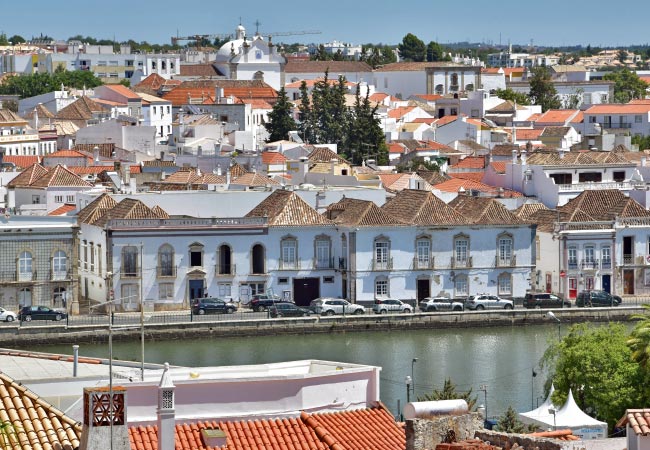
The heart of the Eastern Algarve and, in my view, the prettiest town in the region. Tavira sits on both banks of the Gilão River, joined by a low arched bridge of Roman origin, and its old centre is a pleasant maze of cobbled streets, whitewashed houses, and small plazas planted with orange trees. The town has more than its share of fine churches, a hilltop castle with gardens, and a strong line of family-run restaurants. It is the most balanced of all the Eastern Algarve towns, large enough to keep you occupied for a week, small enough to feel intimate, and well connected by train. For most visitors, this is the right choice of base. Full guide to Tavira.
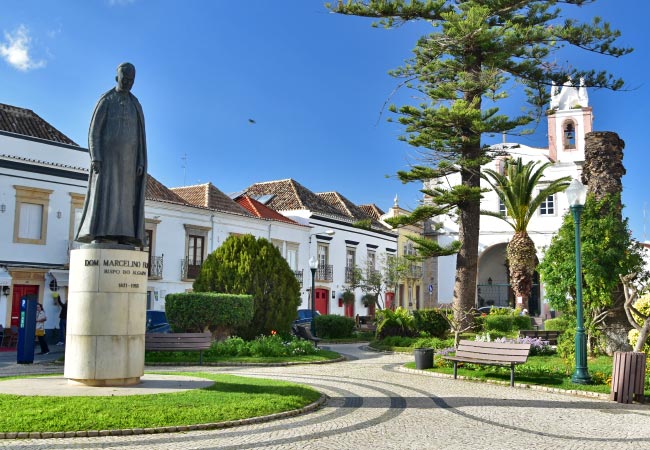
Olhão
A working fishing port that wears its character on its sleeve. Olhão is louder, busier, and less polished than Tavira, with cube-shaped houses showing the town's North African influence and a network of narrow lanes behind the harbour. The two red-domed market halls on the waterfront, one for fish and one for fruit and vegetables, are the finest of their kind in Portugal and the daily centre of life in the town. Olhão suits the visitor who values atmosphere over prettiness, and it has the best ferry connections to the islands of the Ria Formosa. Full guide to Olhão.
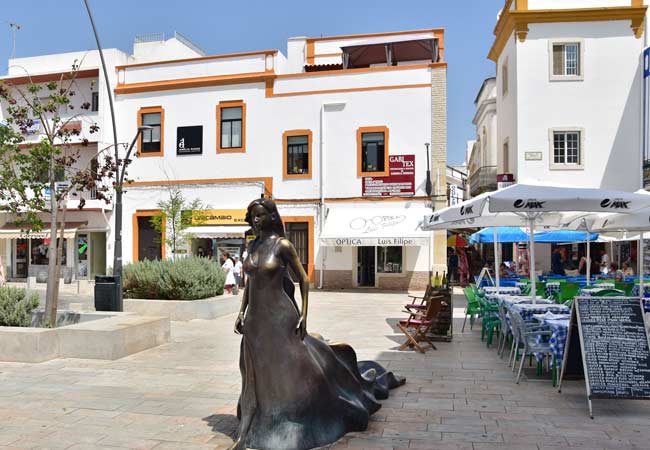
Vila Real de Santo António
The most surprising town in the Algarve. Rebuilt in just five months in 1774 to a perfect Pombaline grid, Vila Real has the elegance of a small Lisbon district transplanted to the Spanish border, with a grand central square paved in black and white cobbles and wide, pedestrianised shopping streets. The town sits on the broad Guadiana River, with a riverside promenade and a small ferry crossing to Ayamonte in Spain, which makes for an easy and entertaining day out. It is more of a place to visit than to base yourself, but well worth a day. Full guide to Vila Real de Santo António.
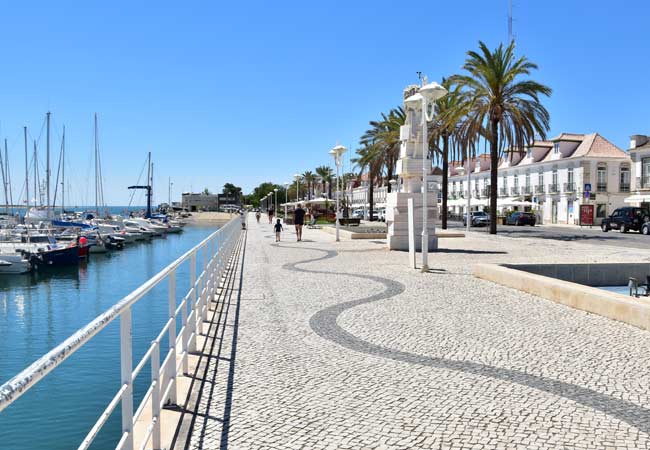
Monte Gordo
The Eastern Algarve's most conventional resort and, by some distance, its most developed. The beach is vast, flat, and gently sloping, with the warmest sea temperatures in the Algarve thanks to the sheltered position near the Spanish border. There are larger hotels here, a small casino, and a palm-lined seafront promenade, all of which make Monte Gordo the easiest choice for visitors who want a recognisable beach holiday with the quieter mood of the Eastern Algarve. Full guide to Monte Gordo.

Cabanas
A small former fishing village turned low-key holiday spot, set along a long wooden boardwalk facing the lagoon. A short ride on a small boat takes you across to the Ilha de Cabanas, a barrier-island beach of soft sand and clear water. There is just enough here to keep you comfortable, a row of restaurants and bars along the boardwalk, a handful of hotels and apartments, and very little else. Cabanas is popular during the winter for long stay residents.
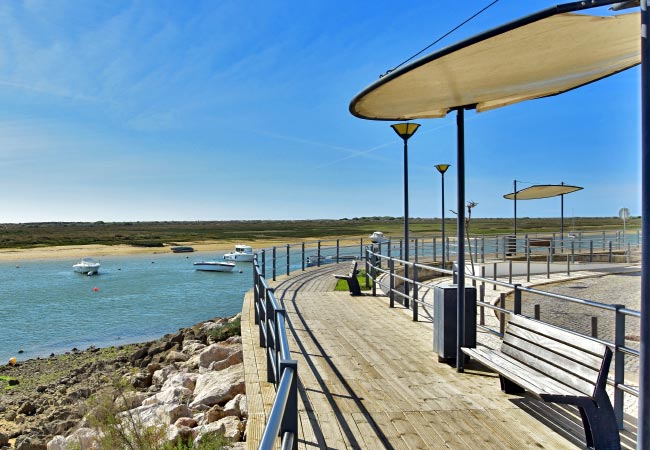
Manta Rota
The Eastern Algarve's most accessible beach, in that you can simply walk onto it without a boat or a bridge. The village itself is small and unpretentious, popular with Portuguese families on summer holiday, with a scattering of low-rise apartments and simple beachfront restaurants. Manta Rota is the easy choice for visitors with young children and older travellers.
Fuseta
A tiny working fishing village built around a small harbour and a simple town square shaded by trees. There is very little to do here in the conventional sense, just a handful of restaurants serving the day's catch, a campsite popular with Portuguese families, and a short ferry across to the Ilha da Fuseta, one of the loveliest of the barrier-island beaches. Fuseta is the most authentic of all the towns on this list, and the right choice for the visitor who wants Portugal at its quietest.
The following map details the main towns (green markers) and beaches (yellow markers) of the Eastern Algarve. Note: zoom in or out to see all of the markers.
Legend: 1) Tavira 2) Olhão 3) Vila Real de Santo António 4) Monte Gordo 5) Cabanas 6) Manta Rota 7) Fuseta 8) Castelo de Castro Marim 9) Santa Luzia 10) Cacela Velha
Beaches: 11) Praia da Ilha da Culatra 12) Praia da Fuseta 13) Praia do Barril 14) Ilha de Tavira 15) Praia de Cabanas 16) Praia de Cacela Velha 17) Praia da Manta Rota 18) Praia da Alagoa 19) Praia de Monte Gordo 20) Praia de Santo António
A day trip to the Eastern Algarve
If you are staying in the central Algarve, in Faro, Albufeira, or Vilamoura, and want a taste of the quieter side of the region, the Eastern Algarve makes for an easy and worthwhile day out. The three suggestions below cover the main options, and each can be done independently without an organised tour.
Tavira If you are only doing one day trip from the central Algarve, make it Tavira. A full day here is easily filled, with a wander through the cobbled streets of the old town, a stop at the Roman bridge, a climb up to the castle gardens for the view, and a long lunch in one of the family-run restaurants near the river. In the afternoon, take the ten-minute ferry from Quatro Águas across to the Ilha de Tavira, one of the loveliest beaches in Portugal, and spend a few hours on the sand before heading back. The train from Faro takes around forty minutes and runs hourly, though a car gives you more flexibility for the beach run Full guide to a day trip to Tavira.
Olhão
A different sort of day, and the right choice if you would rather see Portuguese daily life than a postcard. Start at the two red-domed market halls on the waterfront, where the fish market is at its busiest before nine in the morning, then walk the narrow lanes of the old town behind, with their flat-roofed cube houses showing the town's North African heritage. From the harbour, small ferries run regularly across to the islands of the Ria Formosa, the Ilha da Culatra and the Ilha da Armona, where you can spend a few hours on a quiet barrier-island beach before catching the boat back. Olhão is on the same train line as Tavira, around ten minutes from Faro.
Vila Real de Santo António and Castro Marim
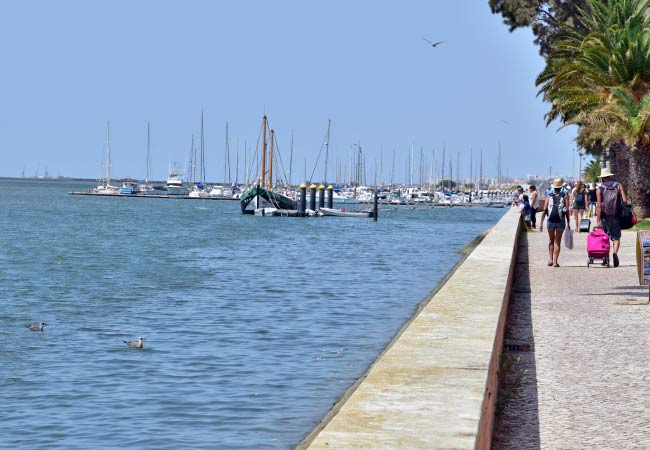
The longest of the three day trips and the one that needs a car, but a fine day out for visitors who like a bit of variety. Spend the morning in Vila Real, walking the elegant grid of streets laid out in 1774, the riverside promenade, and the grand central square. From here, you can take a small ferry across the Guadiana River to Ayamonte in Spain, which makes for an easy and entertaining lunch in another country. In the afternoon, drive ten minutes inland to Castro Marim, where a medieval fortress sits on a low hill above the salt pans of the Sapal Nature Reserve, home to flamingos from late summer through winter.

Castro Marim
If you would prefer to see the Eastern Algarve with the convenience of a guide, GetYourGuide runs a number of well-reviewed tours of the region, and the best of these include:
Why Tavira should be your Eastern Algarve base
If you are coming to the Eastern Algarve for a week or more and are not sure where to stay, my advice is straightforward: stay in Tavira. Of all the towns on this stretch of coast, Tavira is the one that gets the balance right, and for most visitors it will be the right choice without much further thought.
The town is large enough to keep you occupied for a week without ever feeling repetitive. There are enough family-run restaurants, traditional tascas, and small bars that you can eat and drink somewhere different every night. The old town also offers plenty for a slow morning of sightseeing before the heat sets in, all easily walked from end to end in twenty minutes. By early afternoon you are ready for the ferry across to the Ilha de Tavira, one of the finest beaches in Portugal, and the perfect way to spend the hottest part of the day. Accommodation runs from boutique hotels in converted convents and townhouses, including the lovely Pousada Convento Tavira, to simple rental apartments along the river.
The practical case is just as strong. Tavira sits forty kilometres from Faro airport, around forty minutes by car or fifty by train, with hourly trains running through the day. From the town you can reach Olhão, Faro, and Vila Real de Santo António by train without ever needing a hire car, and the ferry to the Ilha de Tavira leaves from the centre. For a base that lets you see the region without driving, nowhere else in the Eastern Algarve comes close.
Best beaches of the Eastern Algarve
The beaches here are a different proposition from those of the western Algarve. Instead of sandstone cliffs and pounding surf, the Ria Formosa lagoon system has created a long chain of barrier islands, with soft golden sand and calm, shallow water that is the warmest in Portugal. These are family beaches in the best sense, and they are some of the loveliest in the country.
Ilha de Tavira: The headline beach of the region. Eleven kilometres of soft sand and clear, shallow water, reached by a short ferry from the town or from Quatro Águas just outside it. A handful of beach restaurants and sunbed concessions sit near the ferry landing, and within a ten-minute walk you have the sand almost to yourself.

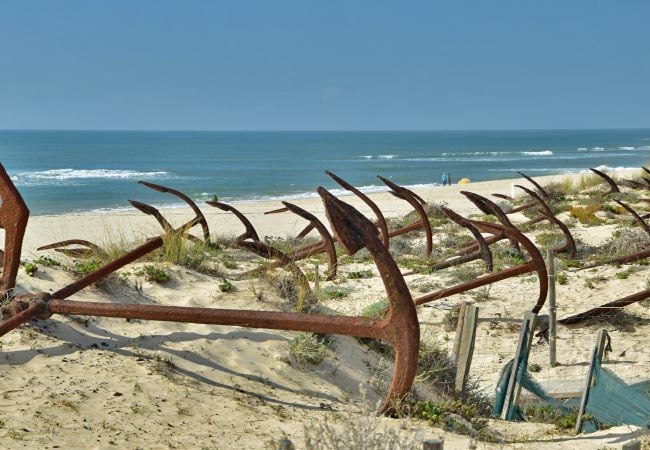
Praia do Barril: The most charming approach of any beach in the Algarve. You cross a wooden footbridge from Pedras d'el Rei and ride a small open-air train through the salt marshes to the dunes. Just before the sand, hundreds of rusted anchors lie half-buried in the dunes, a quiet memorial to the tuna fishing industry that once worked this coast.
Ilha da Fuseta: A short, cheap ferry from the fishing village of Fuseta brings you to one of the clearest stretches of water in the region. There is a single simple beach restaurant near the ferry landing and very little else, which is precisely the appeal
Praia de Cacela Velha: Reached by a low-tide walk across the lagoon from the village above, or by a small boat at high tide, this is the wildest of the beaches on this list. No restaurants, no sunbeds, no shade, just an unbroken stretch of sand and sea. Bring everything you need.

Praia da Manta Rota: The easy choice, and the right one for families with young children or visitors who would rather not deal with a ferry. You walk straight onto the beach from the village, and the sea slopes in gently and warmly.
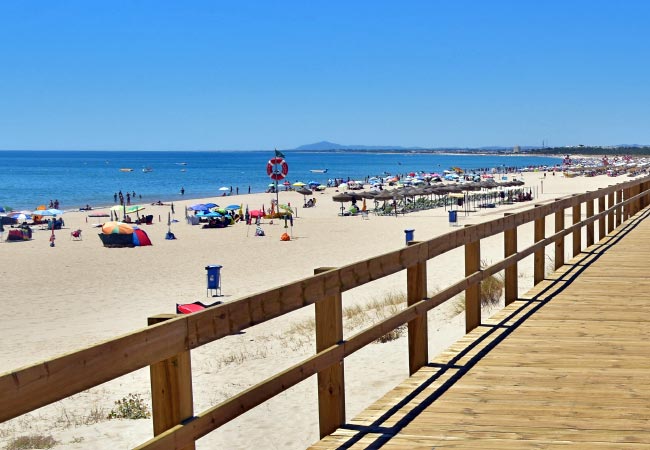
Praia de Monte Gordo: A wide, flat, sandy beach stretching for several kilometres in front of the town, with full facilities, palm-lined promenade, and the warmest sea in the Algarve thanks to its sheltered position near the Spanish border. The most conventional beach on this list, and the right choice for visitors who want hotel, beach, and dinner all within a short walk.
Eastern Algarve weather: when to visit
The Eastern Algarve has, by some margin, the most favourable climate in Portugal. The region records more than three hundred days of sunshine a year, with hot summers, mild winters, and a beach season that runs from mid-April through to late October, with sea temperatures staying pleasant well into autumn.
Summer (June to August) is the obvious choice for a beach holiday and comes with the inevitable trade-offs. Daytime temperatures regularly sit above thirty degrees, and on the hottest days in July and August the afternoon sun, between roughly midday and four, can be uncomfortable for sightseeing. The Portuguese way is to do the practical things in the morning, retreat for a long lunch and a rest through the worst of the heat, and head to the beach in the late afternoon when the sun has softened. Adopt the same rhythm and the season works beautifully. Crowds are at their highest in August, when much of Portugal is on holiday, but even then the Eastern Algarve never feels busy in the way the western resorts do.
Spring (April to May) and autumn (September to October) are, in my view, the finest months to visit. The days are warm but not punishing, the historic towns are at their most pleasant for walking, the beaches are quiet, and the sea, particularly in September, is at its warmest of the year. If you have the flexibility to choose, these are the months I would suggest for your first visit. My parents visited Tavira in late September and it was ideal for them
Winter (November to March) is much quieter and a different kind of holiday entirely. Daytime temperatures sit in the mid-teens, with cool evenings and the occasional wet day, but plenty of bright, clear sunshine in between. The larger towns, Tavira, Olhão, and Vila Real, stay fully open through the winter as they have permanent local populations, while the smaller beach villages slow down considerably. Winter suits walkers, birdwatchers, and visitors looking for warmth without the heat, rather than anyone hoping to swim.
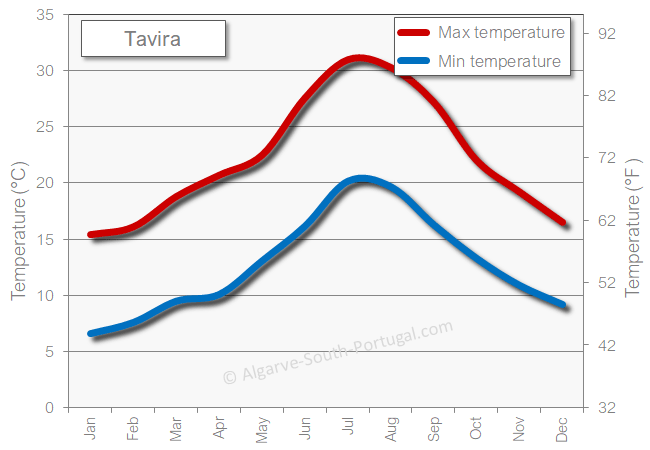
The average day time maximum and the nighttime minimum temperature for Tavira and the east Algarve
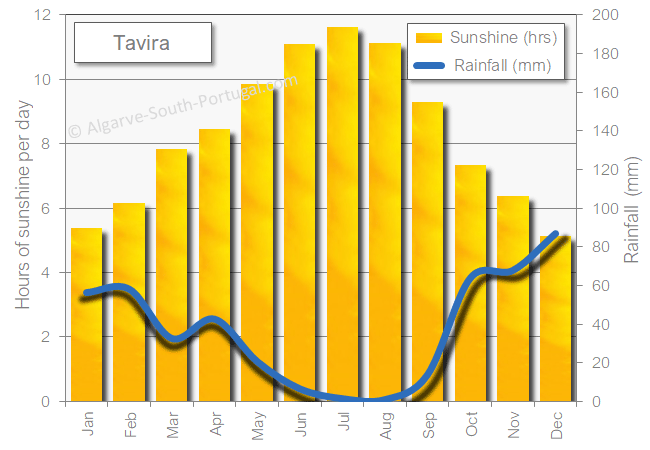
The average hours of sunshine per day and monthly rainfall (in mm)
Our most popular guides to the eastern Algarve


About this guide: I am Philip Giddings. I live in Lisbon with my Portuguese wife, Carla, whose family and friends are in the Eastern Algarve, and I am down to the region most months to research these guides, which are now my full-time work. I made my first trip to Portugal in 2001 and have written independent guides since 2009.
My Algarve guides are part of a wider set of almost 2,000 I have written across Portugal. No tourist board, tour operator, or attraction pays to be included, and the site is funded by affiliate commissions on tour and accommodation bookings, disclosed on every page that carries them. Every practical detail (ticket prices, opening hours, bus routes, boat-tour policies) is checked against the official sources and confirmed in person on the trips I make through the year.Read the full story here.