Algarve-South-Portugal.com
The best independent guide to Vila Nova de Milfontes
Algarve-South-Portugal.com
The best independent guide to Vila Nova de Milfontes
When to Visit Vila Nova de Milfontes: weather guide and best month to visit
Vila Nova de Milfontes is the quintessential Alentejo coastal town, a delight of whitewashed houses and authentic Portuguese charm, sitting where the serene Mira River meets the wild Atlantic. It is a town that the Portuguese adore for their holidays, and still largely undiscovered by international visitors.
The region enjoys long, hot summers and mild but unpredictable winters. The weather is reliably fine for heading to the beach from mid-May until the end of September, though the Atlantic-facing beaches can be windswept even on warm days. The sheltered estuary beaches along the Mira River offer a calmer alternative and are ideal for families.
The peak months are July and August, and the transformation is remarkable. For most of the year, Vila Nova de Milfontes is a peaceful Alentejo village, but once the Portuguese school holidays begin in July, it becomes a vibrant resort town with packed beaches, buzzing streets and surprisingly good nightlife. It is a young, fun, Portuguese town in the summer, and the week-to-week change as the season kicks in is something to experience. August brings the additional wave of visitors as Portuguese workplaces shut down for the traditional summer break.
For most visitors, the best months to visit are June and September. My personal favourite is June. The weather is warm and settled, the beaches are uncrowded, and the town is just starting to come alive without the full intensity of peak summer.
Spring and autumn are particularly well suited for exploring the wider region. The Rota Vicentina hiking trail traces the spectacular coastline, and the rolling Alentejo landscape is perfect for cycling, with quiet roads connecting Vila Nova de Milfontes to Porto Covo and beyond.
Winter months (November through March) bring cooler conditions and unpredictable weather. Vila Nova de Milfontes returns to its quiet village pace, and on a dry spell with bright skies it is a lovely place to be. On grey or wet days, though, it can feel bleak. Most tourist-focused businesses close for the winter, so if you are planning an off-season visit, come prepared for limited options.
I've been exploring Portugal with my Portuguese wife for over 25 years, and Vila Nova de Milfontes is one of the destinations we keep coming back to. Whether it's the buzzing summer streets or a long March cycle through the Alentejo countryside, this town always delivers. This guide will help you identify the ideal time for your visit, and what to expect from each season.
Vila Nova de Milfontes Weather Overview
Vila Nova de Milfontes has a Mediterranean climate with a strong Atlantic influence, which gives the town a noticeably different feel to the Algarve resorts further south. The summers are warm rather than scorching, the sea breezes are a constant presence, and the winters can bring proper Atlantic weather with heavy rain and strong winds. It is a climate shaped by the ocean, and all the better for it.
Summers are warm and dry, with July and August seeing average high temperatures of 28°C (82°F), occasionally reaching above 30°C (86°F) during heatwaves. The constant Atlantic breeze prevents the heat from feeling as oppressive as it does in the Portuguese interior. During these peak months, rainfall is virtually non-existent, with July typically the clearest month of the year.
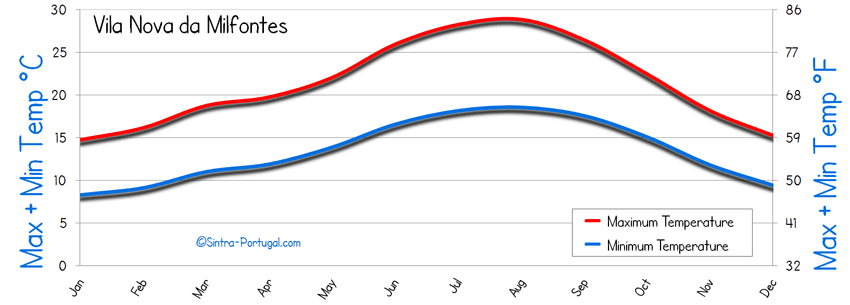
The Average Temperature for Vila Nova de Milfontes
The breeze makes evenings pleasant and comfortable, without the sticky humidity. In the summer you will want air conditioning, though I do not have this in my flat in Lisbon and it is manageable.
Spring (March to May) is one of the loveliest times to visit, with the surrounding Alentejo landscape turning green and wildflowers covering the clifftops along the Rota Vicentina trail. Temperatures climb from 16°C (61°F) in March to around 20°C (68°F) by May. Rainfall decreases as the season progresses, but occasional showers still occur in March and April.
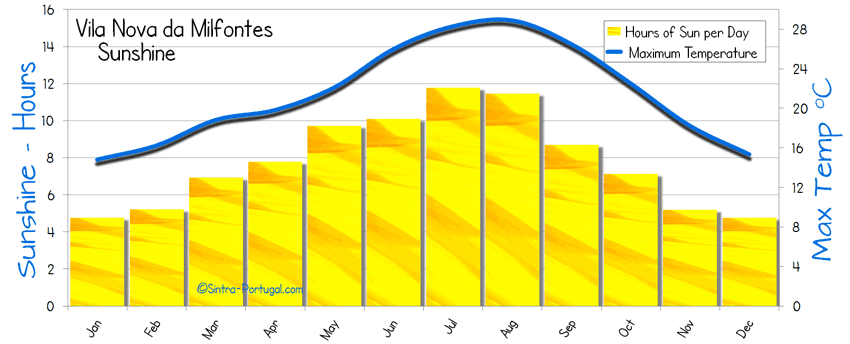
Sunshine hours plotted against temperature for Vila Nova de Milfontes
Early autumn feels like an extension of summer, with September highs staying around 23°C (73°F) and the sea at its warmest after months of sunshine. By late October and into November the weather shifts, with rainfall increasing significantly. November is historically the wettest month of the year for this stretch of coastline, marking the clear transition into winter.
Winter (December to February) is mild compared to northern Europe, with daytime temperatures averaging 16°C (61°F) and nights rarely dropping below 8°C (46°F). This is the cloudiest and windiest time of year. While there are many crisp, sunny days between the fronts, heavy rainfall and strong Atlantic gales are common, and December brings the highest humidity.
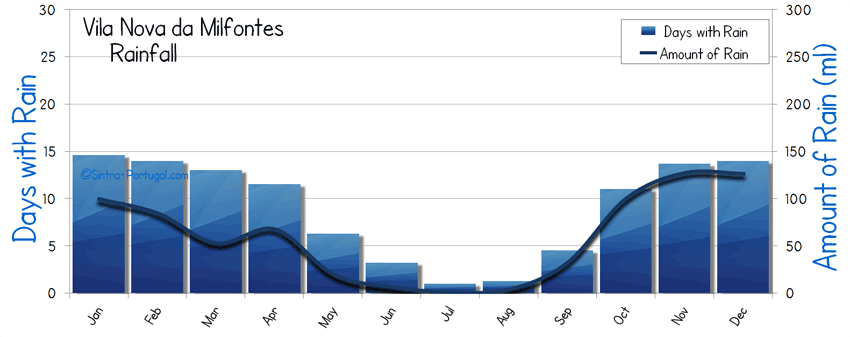
Vila Nova de Milfontes Rainfall and number of wet days
Vila Nova de Milfontes Holiday Guide
Algarve-South-Portugal.com, with over 200 pages, if its not here it's probably not in Portugal!


